
Fully Inclusive
Touring with guides and entrance fees
Discover China’s finest culture, history and natural wonders on this 21‑day cross‑country adventure covering Shanghai, Beijing, Xi’an, Chengdu, Chongqing, Wuhan, Guilin and Hong Kong. Travel seamlessly by high‑speed train between destinations. Explore world‑famous icons: the Great Wall, Forbidden City, Terracotta Army, giant pandas, Longji Rice Terraces, plus a memorable Yangtze River cruise through magnificent gorges. Enjoy local signature dining and plenty of free‑time for independent exploration. The journey concludes in vibrant Hong Kong before your self‑transfer to the airport for your return flight. Selected meals and optional excursions are offered throughout the tour.
Touring with guides and entrance fees

Breakfasts: 19, Lunches: 17, Dinners: 16

19 nights in 3/4 star accommodation

Yangtze River Cruise

Max Group Size: 10

Professional local guide service
Meet the driver on arrival for transfer to the hotel. You'll have the balance of the day at leisure.
With a population of 24.9 million (2021), Shanghai is China’s biggest city, which delights the visitor with its futuristic skyline and historical landmarks. We begin our day with a visit to Jade Buddha Temple located in an old neighbourhood. We then walk the famous Bund – a waterfront promenade with a riveting history. After lunch, we stroll the historical People’s Park and adjacent People’s Square in the heart of the city. Originally part of the Shanghai Race Club first established in 1850, the park and the square are surrounded by world-class museums and shops, which attract millions of visitors each year. We wrap up the day’s sightseeing with a tour of the exquisite Yu Garden in the old town centre.
Free day to explore on your own. We recommend Shanghai Museum and the Urban Planning Exhibition Center nearby. Shanghai Museum is frequently cited by visitors as one of the best of its kind in China.
After breakfast we take the world’s fastest train (350 km/h) to Beijing. The capital of China, Beijing is a world-class cultural and educational centre with a population of 21.9 million (2020), ranking it China’s second biggest city behind Shanghai. Beijing is renowned for its opulent palaces, temples, and huge stone walls and gates – treasures that make it the most popular tourist city in China by the number of visitors it receives every year. Beijing was already a strategically important city in northern China for centuries when Kublai Khan (1215-1294) decided to move his capital here from Karakorum in Mongolia. With the collapse of the vast Mongol empire in 1368, Beijing, known as Da Du or Grand Capital at the time, lost its status as the country’s capital but regained it in 1420 when the imperial court of the successive Ming Dynasty moved here from Nanjing. Beijing continued to serve as China’s capital after Manchu tribes dethroned the last emperor of the Ming Dynasty in 1644 and established the Great Qing Empire (Qing Dynasty), which lasted until 1912. Free afternoon to explore on your own. Optional tour of Lama Temple is available upon request. Lama Temple was built in 1694 as residence of Prince Yong, one of the sons of Emperor Kangxi. After Prince Yong ascended the throne as Emperor Yongzheng in 1722, half of his former residence was turned into a lamasery – a monastery for monks of Tibetan Buddhism.
We begin our sightseeing today at the Forbidden City. Officially known as the Palace Museum, the Forbidden City was the place where the emperors of the Ming (1368-1644) and Qing (1644-1912) dynasties lived and carried out their administration. Construction of the Forbidden City took 14 years (1406-1420) to complete. The complex consists of 980 buildings and covers 72 hectares or 180 acres. It exemplifies traditional Chinese palatial architecture and has influenced cultural and architectural developments in East Asia and elsewhere. Afternoon sightseeing takes place at the Temple of Heaven. Situated in southeastern Beijing, the Temple of Heaven is China’s largest extant sacrificial temple where, during the Ming and Qing Dynasties, the emperors conducted the elaborate and most exalted sacrifices addressed to “the Supreme Ruler of the Universe.” Construction of the temple started in 1406, during the reign of the Ming Emperor Yongle, and took 14 years to complete. The temple was expanded under the Qing emperors Qianlong (1736-1796) and Jiaqing (1796-1820). Occupying 2.73 square kilometres (roughly 1,700 by 1,600 metres), the area of the Temple of Heaven is more than twice that of the Forbidden City. The famous Hongqiao Pearl Market, the largest pearl market in the world, is right across the street from the Temple of Heaven. Recommended by numerous guidebooks for freshwater pearls, Hongqiao teems with domestic and international shoppers. If you are interested, please ask the guide to drop you off there. However, you’ll need to get back to the hotel by taxi, which costs less than 10 US dollars. Today we enjoy a delicious dinner at a popular Peking Roast Duck restaurant. Peking Roast Duck is a famous Beijing dish prized for the thin and crispy skin with authentic versions serving mostly the skin and little meat, sliced in front of the diners.
After an early breakfast we embark on a full-day excursion to the legendary Great Wall at Mutianyu, 75 km northeast of the city. Zigzagging over 6,000 kilometres from east to west along undulating mountains, the Great Wall was built to hold off tribal invaders from the north. As history shows, the Wall failed the Chinese rulers miserably, especially in the case of Kublai Khan whose cavalrymen swept across China from the Mongolian steppe, thus marking the beginning of the Yuan Dynasty (1279-1368). Construction of the earliest sections of the Wall started in the 7th century BCE. A major renovation started with the founding of the Ming Dynasty in 1368 and took 200 years to complete. The wall we see today in Beijing is almost exactly the result of this effort.
We begin our sightseeing today with a visit to a traditional hutong neighbourhood. Hutong refers to an ancient alleyway lined with siheyuan, or "4-sided courtyard houses," on both sides. The name hutong dates back to the Yuan Dynasty (1279–1368 CE). According to experts, the word originated from the Mongolian language, in which it is pronounced as "hottog" and means "well" — in ancient times, people tended to gather and live around wells. As such, the original meaning of hutong is "a place where people gather to live." Next on our schedule is the Summer Palace, a well-preserved UNESCO World Cultural Heritage Site. The imperial resort was first named the Garden of Clear Ripples, which was burnt down by the allied forces of Great Britain and France in 1860 at the end of the Second Opium War (often referred to as the Arrow War by the British). Reconstruction began 25 years later and was completed in 1895, when the site was renamed Yi He Yuan (Garden of Good Health and Harmony). The design centres on Longevity Hill and Kunming Lake to its south. The sprawling complex covers 290 hectares, with more than 3,000 buildings across the grounds. In the afternoon, we board a high-speed train to Xi'an. Gliding through fertile farmland dotted with traditional villages, the journey offers a relaxing way to take in the Chinese countryside. China's high-speed rail network is now the largest in the world, rivalling France's TGV and Japan's shinkansen in safety, speed, comfort and punctuality — ensuring a smooth and enjoyable transition to our next destination.
With a history dating back over 3,000 years, Xi’an served as China’s capital during several ruling dynasties including the Han (206 BCE – 220 CE) and the Tang (618 – 907). It is home to the famous Terracotta Army and the eastern terminus of the ancient Silk Road, a network of trade routes connecting China proper with regions as far as the Mediterranean beginning in the second century BCE. We spend the morning visiting the Terracotta Army. Built on the excavation site, the museum is located 30 km east of the city. Designed to follow the first emperor of the Qin Dynasty (221-206 BCE) into eternity, the Terracotta Army represents one of the greatest archeological discoveries of the 20th Century. After lunch we return to the city for a stroll on the ancient city wall. Declared a national treasure by the State Council in 1961, the wall (first built in 1370) encircles an area of 14 square kilometres. It runs 13.7 kilometres long and measures 12 metres in height with a base thickness between 15 and 18 metres.
Morning sightseeing begins at Shaanxi Provincial Museum. The modern, well-organized museum was completed in 1992 and traces the history of Xi’an from prehistory to the Qing dynasty (1644-1912). The extensive galleries and exhibitions offer the visitor an excellent introduction to the area that greatly improves understanding of the numerous historical sites in and around the city. We then visit the grand mosque in the old town centre and the adjacent Muslim bazaar. The mosque was established in the 8th century but the majority of the complex was constructed in the Ming Dynasty (1368-1644). It was further expanded in the Qing Dynasty. Unlike most mosques in Middle Eastern or Arab countries, this mosque is completely Chinese in architectural style. It has neither domes nor traditional minarets. This afternoon we ride the bullet train to Chengdu, the capital of populous Sichuan Province. The ancient city has a population of 14 million with half of that within the urban centre and the remainder in the surrounding districts. The fertile Chengdu Plain, on which Chengdu is located, is also known as “Country of Heaven”, a phrase also often translated as “The Land of Abundance”. The discovery of the Jinsha site suggests the area of Chengdu had become the centre of the Bronze Age Sanxingdui culture around the time of the establishment of the state of Shu, prior to its annexation by Qin in 316 BCE.
Morning sightseeing takes place at Chengdu Research Base of Giant Panda Breeding. The giant panda, unrelated to the red or lesser panda, is a bear native to south central China, living in mountainous regions. It is easily recognized by the large, distinctive black patches around its eyes, over the ears, and across its round body. Though it belongs to the order Carnivora, the panda’s diet is over 99% bamboo. The giant panda has an insatiable appetite for bamboo. A typical panda eats half the day – a full 12 out of every 24 hours – and relieves itself dozens of times per day. Giant pandas are solitary creatures. They have a highly developed sense of smell that males use to avoid each other and to find females for mating in the spring. After a five-month pregnancy, females give birth to a cub or two, though they cannot care for both twins. The blind infants, born fully white, weigh only 5 ounces (142 grams) at birth and cannot crawl until they reach three months of age. The giant panda is a conservation-reliant species. Although no longer considered by the International Union for Conservation of Nature (IUCN) to be Endangered, the species is still classified as Vulnerable. Recent statistics show 637 pandas living in captivity with most of them inside China. The most authoritative estimate as of late 2022 puts the number of giant pandas living in the wilderness at 1864. We spend most of the afternoon at Jinsha Museum. In February 2001, construction workers chanced upon a significant archaeological discovery in modern China. The discovery led to the naming of Jinsha culture (1200 – 650 BCE) and a museum was erected at the excavation site. Jinsha culture flourished around 1000 BCE and shares similarities in burial objects with the Sanxingdui site located 50 km from Chengdu. Objects made of ivory, jade, bronze, gold and stone were unearthed at the site. Unlike the site at Sanxingdui, Jinsha did not have a city wall. Jinsha culture is believed to be a final phase of Sanxingdui civilization and represents a relocation of the political center in the ancient Shu Kingdom. Today’s tour ends at Wang Jiang Lou Park. “Wang Jiang Lou” means “river-overlooking tower” and the park is so named because of the ancient pagoda-shaped wooden tower onsite. The beautiful little park dotted with verdant bamboo groves has long been a favourite spot for leisure among locals.
We ride the bullet train to Chongqing where we board the Yangtze cruise ship following dinner.
At 6,380 km, the Yangtze is the longest river in China and the third longest in the world after the Nile and the Amazon. The most impressive section of the Yangtze is the Three Gorges stretching 119 km. On today’s shore excursion we visit Precious Stone Fortress (shi bao zhai) built atop a hill overlooking the Yangtze. It was so named because the location was once used as a stronghold by a group of uprising peasants in the mid-17th century. About one hundred years later, a Buddhist temple was built on the hill. Several more decades passed before a staircase covered by a 9-storey wooden pagoda was added. In 1956, the pagoda was expanded to the current 12 storeys.
Admire nature’s grandeur while sailing through spectacular Wu Gorge (45 km) and Qutang Gorge (8 km). Later this morning, we hop on a small vessel to explore Goddess Stream. A tributary of the Yangtze, the emerald-coloured stream traverses through narrow gorges walled by soaring cliffs.
Morning visit to the Three Gorges Dam site. This is the largest hydroelectric dam in the world with a reservoir stretching hundreds of kilometres upstream. We disembark the ship at noon and travel to Wuhan by high-speed train (2 hours). Due to time constraints, we will not be able to have a proper lunch; instead, a lunch box will be provided for you to carry onto the train.
Wuhan is the capital of Hubei Province and a powerful economic engine in central China. A pivotal hub of transportation, the sprawling city straddles the Yangtze. It became known as Wuhan in 1927 when Wuchang, Hanyang, and Hankou were amalgamated. The city contains many beautiful lakes and parks including the expansive East Lake. This morning we visit Hubei Provincial Museum. If we are lucky, we may get to watch a live performance featuring a set of bronze chime bells replicated from originals made two and a half millennia ago. After an early lunch we board the high-speed train for Guilin. A small city by Chinese standards, Guilin has long been renowned for its unique scenery. The name Guilin literally means “forest of sweet osmanthus”, owing to the large number of fragrant sweet osmanthus trees in the city.
Enjoy a full-day hiking excursion to the terraced rice fields in Longji. Located 80 km (2-hour drive) to the north of Guilin, Longji (meaning dragon’s back), is famous for its terraced rice fields. Because the villages at Longji are in the jurisdiction of Longsheng County, the tourist attraction is often collectively referred to as Longsheng Terraced Fields. The scenery is arguably at its best in early May during transplanting and in late September to mid-October when the fields turn golden. Built by local farmers of different ethnic groups from the Yuan Dynasty (1271-1368) to the Qing Dynasty (1644-1912), the mountainous fields cover a total area of 66 square kilometres, rising between 300 meters and 1,100 metres above sea level. Optional Tea Farm Visit If time permits, we can arrange a late afternoon visit to Guilin Tea Science and Research Institute for a nominal fee, subject to a minimum of 6 participants. Founded in 1956, the state-owned institute has an experimental tea farm covering an area of 42 hectares and boasts 250 species of tea plants. The predecessor of the institute was said to be one of the tea suppliers to the imperial court during the Ming Dynasty. The farm sits on fertile soil ideal for tea growing. During harvesting season, the farm employs 150 workers full time to pick tea leaves. Each year the institute produces around 42 tons of organically grown tea of different flavours.
We begin today with a five-hour cruise down the Li River. The 83 km stretch of the river between Guilin and Yangshuo affords breathtaking scenery as the river snakes through tall karst mountains, gigantic bamboo sprays, and picturesque villages — sights that have inspired countless poets and painters for generations. We disembark in Yangshuo after lunch on board and drive back to Guilin. We wrap up the day with a quick tour of Fubo Hill (elevation 63 metres) located 2 km from the hotel. Walking back to the hotel along Li River is a perfect way to soak in the beauty of the city.
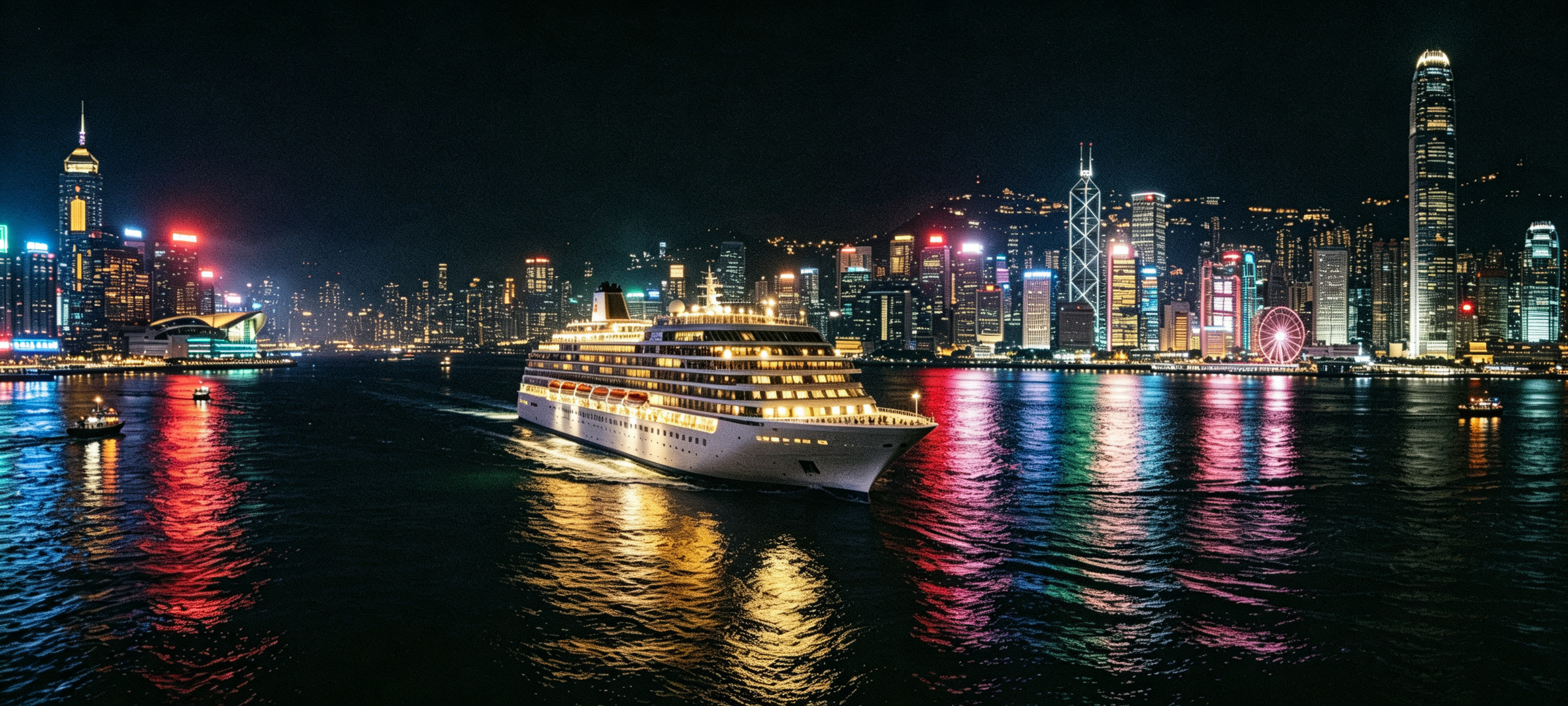
Free morning to explore on your own. We depart for Hong Kong by high-speed train (3 hours) in the afternoon. Hong Kong (meaning “fragrant harbour”) is one of the two special administrative regions of the People’s Republic of China, along with Macau. Comprising more than 260 islands, the territory is located on the eastern side of the Pearl River Delta, bordering Guangdong Province in the north and facing the South China Sea in the east, west and south. Hong Kong was a dependent territory of the United Kingdom from 1842 until the transfer of sovereignty to the People’s Republic of China in 1997. The Sino-British Joint Declaration and the Basic Law of Hong Kong stipulate that Hong Kong operate with a high degree of autonomy until at least 2047, fifty years after the transfer. Under the policy of “one country, two systems”, the Central People’s Government is responsible for the territory’s defense and foreign affairs while Hong Kong maintains its own legal system based on English common law, police force, monetary system, customs policy, immigration policy, and delegates to international organizations and events.
Morning sightseeing in Hong Kong begins with a ferry ride across Victoria Harbour from Tsim Sha Tsui to Central. The heart of Hong Kong’s business district, Central is home to the regional headquarters of many multinational financial services corporations. Consulates general and consulates of many countries are also located in this area, as is the government of Hong Kong. We then proceed to the top of Victoria Peak. Also known as Mount Austin or The Peak among locals, Victoria Peak is located in the western half of Hong Kong Island with an altitude of 552 meters (1,811 feet). The peak offers sweeping views over Central, Victoria Harbour and the surrounding islands. We stop briefly at Repulse Bay before retreating to a nice restaurant for our farewell luncheon. The afternoon is set aside for you to explore on your own. Your local guide will be glad to give you some advice on what to do.
The tour ends this morning. Transfer to the airport on your own for return flight. You can go by taxi (approx. US$30) or the airport limousine bus which makes a stop at the hotel. Alternatively, you may take a taxi to Kowloon Station, from which the Airport Express Train (US$12) delivers you right into the airport terminal in 21 minutes.
Contact Panorma to shape this journey around you.